
Looking for Fibromyalgia Treatment in London? Meet Osteopath Rakhee Mediratta
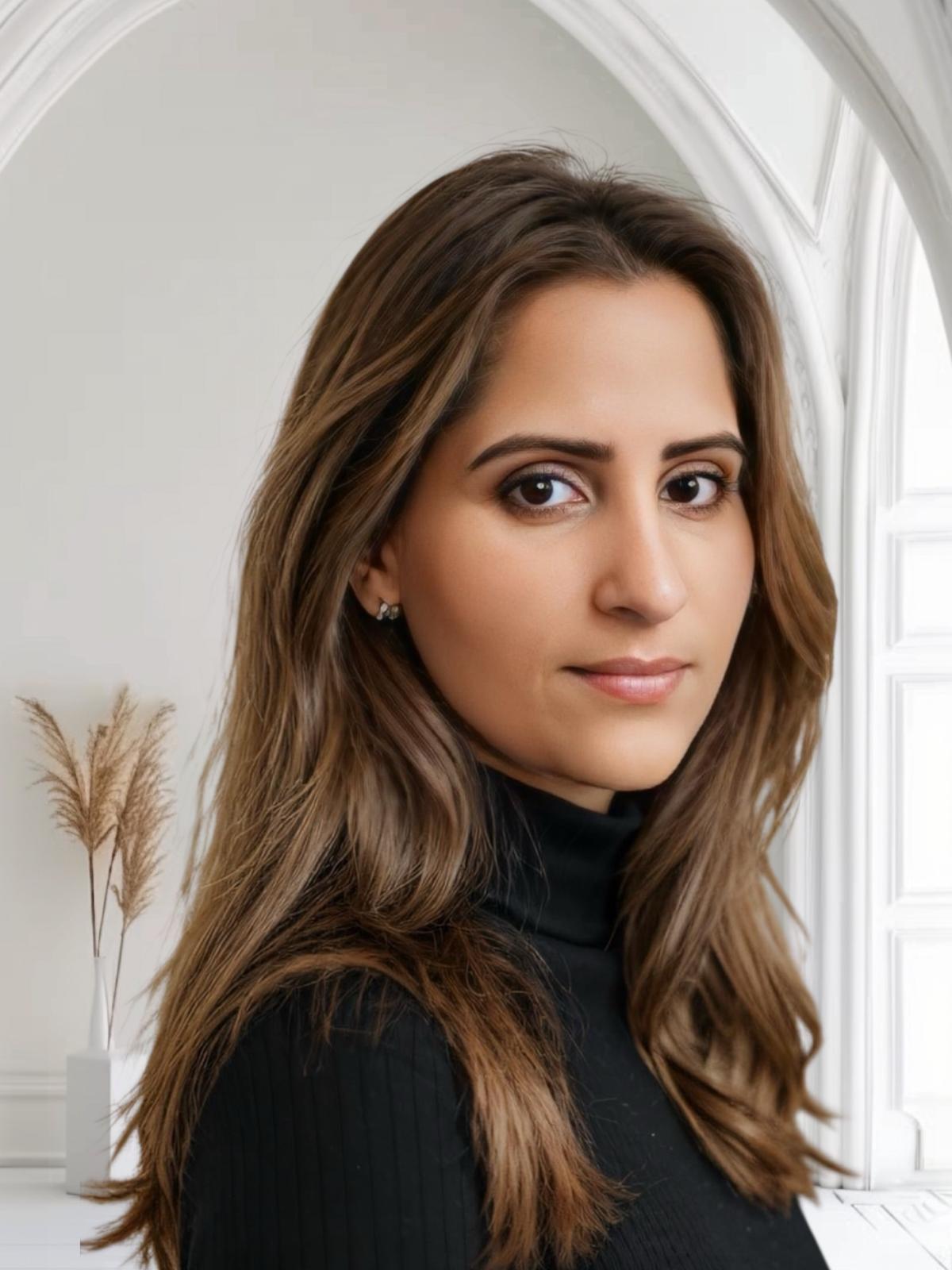

If you are searching for fibromyalgia treatment in London, you may have already spent a considerable amount of time trying to understand your symptoms, exploring different healthcare options and looking for someone who genuinely understands the complexity of fibromyalgia.
Perhaps widespread pain is affecting your everyday life. Perhaps fatigue, poor sleep, stiffness or difficulty concentrating have become familiar parts of your routine. Or perhaps you are simply looking for a practitioner who will take the time to listen and explain the options available to you.
I'm Rakhee Mediratta, a registered osteopath and Advanced Licensed Perrin Technique Practitioner. I have 19 years of clinical experience and have worked with more than 5,000 patients. A significant part of my professional work has involved the Perrin Technique, an osteopathic approach developed by Dr Raymond Perrin.
I have trained directly with Dr Perrin, worked alongside him for more than a decade and assisted with practitioner training. I have also been awarded two Excellence in Practice Awards by Dr Perrin and contributed to the second edition of his book.
My interest in fibromyalgia comes from years of working with people experiencing complex, long-term symptoms. I believe it is important to understand the individual, explain the approaches available and be open about what current research does and does not establish.
Understanding fibromyalgia: it is more than widespread pain
Fibromyalgia is a long-term condition associated with widespread pain and increased sensitivity to pain. It can also involve fatigue, muscle stiffness, disturbed sleep, headaches and difficulties with concentration or memory, often described as fibro fog.
Symptoms can fluctuate. Someone might manage their usual activities one day and find the following day much more difficult. The condition can affect work, relationships, family life and the ability to enjoy everyday activities.
There is no single test that confirms fibromyalgia. Diagnosis is based on a healthcare professional's assessment of symptoms and medical history, with investigations sometimes used to consider other possible causes.
The exact cause of fibromyalgia is not fully understood. Research has explored how the nervous system processes pain and how different factors may contribute to the condition. It is a complex area, and there is no single explanation that accounts for every person's experience.
One thing I have learnt during my years in practice is that two people with fibromyalgia can have very different needs. I would never assume that the same approach is suitable for everyone.
If you are looking for fibromyalgia treatment, what should you consider?
There is no single treatment that works for everyone with fibromyalgia. Established management options can include physical activity adapted to the individual, psychological therapies such as CBT or ACT, and medication where appropriate. A GP or relevant healthcare professional can help someone consider these options.
You may also come across complementary approaches when researching fibromyalgia treatment in London.
It is worth understanding the difference between an established medical treatment and a complementary approach. They are not interchangeable, and the evidence supporting them may be very different.
My professional background is in osteopathy, and my specialist interest is the Perrin Technique. I offer osteopathic consultations where I can explain my approach, discuss a person's circumstances and consider whether complementary osteopathic care is appropriate to explore.
I do not present the Perrin Technique as a proven treatment or cure for fibromyalgia. Its effectiveness for fibromyalgia has not been established by sufficient high-quality clinical evidence. I think people deserve to know that clearly before making decisions about their care.
That does not mean the approach needs to be dismissed or that there is nothing worth understanding about it. It has a specific history, theory and method, and I have dedicated many years to studying and practising it.
The Perrin Technique: my specialist area of osteopathic practice
The Perrin Technique was developed by Dr Raymond Perrin. It is a specialised osteopathic approach based on his proposed model involving the autonomic nervous system, the spine and ribcage, and neuro-lymphatic drainage.
The approach uses a combination of specific manual osteopathic techniques and soft-tissue techniques. Depending on the assessment and the individual's circumstances, these may involve areas such as the back, ribcage, chest, neck and head.
It is more than a general massage or a single lymphatic drainage technique. It has a defined framework and a particular theoretical basis developed by Dr Perrin.
I began training with Dr Perrin in 2007. Since then, I have continued to develop my knowledge of the approach and have worked alongside him for more than a decade. I have also assisted with professional training courses and contributed to the second edition of his book, The Perrin Technique.
I am particularly interested in the way the technique brings together osteopathic assessment and manual approaches within Dr Perrin's proposed model.
It is important, however, to distinguish the theory behind the technique from what has been scientifically established. The proposed mechanisms should not be presented as proven explanations for fibromyalgia, and research involving ME/CFS cannot automatically be applied to fibromyalgia.
My experience gives me a detailed understanding of the technique itself. It does not remove the need for further clinical research into its effectiveness for different conditions.
What does the research say about the Perrin Technique and fibromyalgia?
This is an important question, and one I believe deserves a straightforward answer.
The Perrin Technique has been the subject of published research, particularly in relation to ME/CFS. Some studies have examined aspects of the proposed model, while others have investigated manual approaches or physical assessment methods.
For example, a small pilot study published in the International Journal of Osteopathic Medicine in 2011 investigated a manual therapeutic approach in people with CFS/ME. It involved a small number of participants, so its findings should be treated as preliminary rather than conclusive evidence.
A separate study published in BMJ Open in 2017 investigated the diagnostic accuracy of physical assessment techniques associated with the Perrin approach in ME/CFS. It was an assessment study, not proof that the technique is an effective treatment for fibromyalgia.
That distinction matters.
Research into ME/CFS is not the same as research into fibromyalgia. At present, there is insufficient high-quality clinical evidence to establish the Perrin Technique as an effective treatment for fibromyalgia.
I would welcome further research specifically involving people with fibromyalgia. Larger, well-designed studies would help establish whether the approach has a role in this area and what its limitations might be.
I believe it is possible to be interested in a developing area of osteopathic practice while remaining honest about the current evidence. In fact, I think that honesty is essential.
Why experience with the Perrin Technique matters
Learning a specialised osteopathic approach involves more than knowing the individual techniques. It also means understanding its framework, the reasoning behind its development and the importance of appropriate assessment.
My experience has developed through many years of practice, direct training with Dr Perrin and working alongside him in a professional and educational setting.
I have also been fortunate to contribute to the second edition of his book and receive two Excellence in Practice Awards from him.
These are milestones in my professional journey and reflect my involvement with the technique. They are not clinical evidence that it is effective for fibromyalgia, and I would not suggest otherwise.
For me, continuing professional development is important. I want to keep learning, follow relevant research and remain open to new information as our understanding of complex conditions develops.
What happens during an osteopathic consultation?
If you are considering an appointment with me, the first step is to understand your individual circumstances.
I would want to hear about your health history, your current concerns and how your symptoms affect everyday life. We can discuss any previous assessments or diagnoses, the healthcare support you already receive and what you would like to understand about osteopathy and the Perrin Technique.
An assessment may include a discussion of your medical history and an appropriate physical examination. I can then explain my professional approach, including what the Perrin Technique involves, its proposed theoretical basis and the limitations of the available evidence for fibromyalgia.
There is an opportunity to ask questions and decide whether you wish to explore complementary osteopathic care.
I do not believe in making promises about outcomes. Nor would I suggest that someone should stop medication, disregard medical advice or replace established healthcare with a complementary approach.
My aim is to make sure people understand what I offer and have the information they need to make their own decisions.
Choosing a fibromyalgia practitioner in London
When researching fibromyalgia treatment in London, it is worth looking beyond a website headline. Consider the practitioner's qualifications, professional registration, experience and whether they explain the evidence behind their approach.
You should feel comfortable asking questions such as:
What are your professional qualifications?
Are you registered with the relevant professional regulator?
What does the proposed approach involve?
What research supports it for my particular condition?
What are its limitations?
How does it fit alongside my existing medical care?
I would encourage anyone considering complementary osteopathic care to ask these questions. A practitioner should be able to explain their approach clearly without promising a cure or making claims that go beyond the evidence.
As a registered osteopath with the General Osteopathic Council, I take my professional responsibilities seriously. My training and experience with the Perrin Technique form an important part of my practice, but so do clear communication, appropriate assessment and realistic expectations.
A personal perspective after 19 years in practice
After 19 years working in osteopathy, I remain interested in the questions that complex conditions such as fibromyalgia raise.
I have spent a significant part of my professional life learning about the Perrin Technique, working alongside its developer and developing my own understanding of the approach.
I am proud of that experience. It has given me a detailed knowledge of a specialised area of osteopathic practice and a continued interest in its development.
At the same time, I know that experience is not a substitute for scientific evidence. People living with fibromyalgia deserve accurate information, appropriate medical care and the freedom to make informed choices about complementary approaches.
If you have arrived here after searching for Fibromyalgia Treatment London, I hope this article has helped you understand a little more about my background, the Perrin Technique and the distinction between complementary osteopathic care and established fibromyalgia management.
For me, the starting point is always an informed conversation, an individual perspective and honesty about what is known.
Frequently asked questions
What is the best treatment for fibromyalgia?
There is no single treatment that works for everyone. NHS guidance describes approaches including exercise, talking therapies and medication, selected according to individual needs and circumstances. A GP or appropriate healthcare professional can help discuss the available options.
Can an osteopath help someone with fibromyalgia?
An osteopath can discuss whether complementary osteopathic care is appropriate as part of someone's wider healthcare. The suitability of any hands-on approach needs to be considered individually. It should not replace medical diagnosis, treatment or advice.
What is the Perrin Technique?
The Perrin Technique is a specialised osteopathic approach developed by Dr Raymond Perrin. It is based on his proposed model involving the autonomic nervous system and neuro-lymphatic drainage and uses specific manual techniques.
Is the Perrin Technique a proven treatment for fibromyalgia?
No. There is currently insufficient high-quality clinical evidence to establish the Perrin Technique as an effective treatment for fibromyalgia. Research involving ME/CFS should not be interpreted as proof of effectiveness for fibromyalgia.
Who is Rakhee Mediratta?
Rakhee Mediratta is a registered osteopath with a BSc (Hons) in Osteopathic Medicine from the British College of Osteopathic Medicine. She is an Advanced Licensed Perrin Technique Practitioner, trained directly by Dr Raymond Perrin, and has 19 years of clinical experience. She has worked alongside Dr Perrin for more than a decade, assisted with practitioner training and received two Excellence in Practice Awards from him.
Where can I find fibromyalgia support in London?
If you are researching fibromyalgia care in London, you can explore medical and complementary options. Check practitioners' qualifications, registration, experience and the evidence supporting any approach they offer. Rakhee's osteopathic practice provides information and consultations about her osteopathic approach and the Perrin Technique.
This article is for general information and does not replace medical advice, diagnosis or treatment. The Perrin Technique is a complementary osteopathic approach. Its effectiveness as a treatment for fibromyalgia has not been established by sufficient high-quality clinical evidence. Please continue to seek appropriate medical care and discuss complementary approaches with your healthcare professionals.
Written by Rakhee Mediratta and reviewed November 2026 Registered Osteopath, General Osteopathic Council (GOsC registration 6576)BSc (Hons) Osteopathic Medicine, British College of Osteopathic MedicineAdvanced Licensed Perrin Technique Practitioner

